
Respect!
Respect!
How can we secure human society and wellbeing, for current and future generations?

Respect! This is the one word I feel summarizes the climate agenda. On the one hand, the respect for the systems that sustain life on earth: ecosystems, water, land and, of course, the atmosphere and climate system.
And on the other hand, the respect for the complexity of societal transformation: the fact that a low-carbon and resource-efficient society requires fundamental changes in all socio-economic systems that sustain our modern societies and the welfare state. The question at hand is not, as it is often framed, how we can “protect the climate”; it is instead how we can secure human society and wellbeing, for current and future generations. It is not the climate system that faces a crisis; it is we humans.

My passion and curiosity for the climate system really took off when I did my research back in the early 1990s in places where changes today are most profound—in the Polar Regions. When you experience the vastness of Antarctica and the diversity of the Arctic, it has an impact on you. You feel small as an individual, the power of nature is immense but, at the same time, you realize that even in these remote places, human impacts are profound. We can already observe staggering changes due to human-induced climate change in the Arctic,with dwindling summer sea ice, melting glaciers and rapid changes in ecosystems.
I have been blessed with a career that, since then, has taken many turns and offered different dimensions and perspectives. From working in different UN agencies, heading an international research foundation, to now, serving as the chair of the Swedish Climate Policy Council, as a senior advisor to the President of Stockholm University, and as a member of numerous boards. An increasing share of my time is dedicated to communication and dialogue, as a way to stimulate interest and action related to climate change. Through this, I meet company boards and executive teams, organizations, politicians and journalists. This is a reflection on just how far we have moved with the climate change agenda. It is evident that the entire society is engaged; this is a huge difference compared with just 10-15 years ago. One of my tasks today is also to have a regular piece on climate on the Swedish National Channel 4 Saturday morning news program.
Explaining the complexities of climate change and societal transformation in ways that people can grasp is an interesting challenge. And to do so in a way that communicates the severity of the challenge while not instilling a feeling of doom and despair. Instead, doing so in a way that spurs curiosity to learn more, and stimulates that drive “to do more”, rather than shutting yourself off from a problem that can feel overwhelming.
A sense of optimism drives my work. It builds on the fact that we, all of us in our different roles and capacities that together form human society, clearly have a shared responsibility—and ability—to solve the environmental challenges we face. If we just put our minds and resources together. It is a conscious choice I have made, but my optimism is also based on actual positive developments that are increasingly evident all around us, not least in recent years. Sometimes, I face criticism for my optimism.
Some accuse me of being naïve and closing my eyes to problems. But believe me, I know we are still facing enormous challenges. And far from everything is going in the right direction. I often lie sleepless in the early hours before dawn and think about what kind of world we will leave behind for our children. I see all these images of environmental degradation, disasters, conflicts, people getting hurt.
I could devote my work to communicating about climate-related threats, about water scarcity causing conflicts, about how we exploit natural resources as if there were no tomorrow, or about how animals and plants are being displaced and are disappearing at an ever accelerating rate. About plastics in the oceans and environmental toxins. Too many leaders who think more about their own power than about our common good. Questions that in many ways still characterize my working day. But I am personally driven by trying to contribute to, and inspire, changes that I hope will lead us to solve problems. For me, it is about starting from a mindset of opportunities instead of constantly being stuck in the description of the problems. To highlight solutions and good examples rather than forever repeating that we are on the way to doom. To believe in our amazing abilities to find solutions rather than focusing on our shortcomings.
I do not argue we can now sit back and let the changes take their course. It is more important than ever that countries and regions take the lead and demonstrate, in practice, that there need not be a conflict between welfare and a strong economy and mitigating climate change. We need cities and regions that build sustainable and attractive urban and rural environments as part of their climate strategies. We need a vibrant business community that can demonstrate it is profitable to set science-based targets, be at the forefront, and that it builds value, creates new business opportunities, and contributes to societal development.
So, my optimism for the future stems from the fact that I genuinely believe in us humans and our abilities. That when we do things together, with united forces, the result can be outstanding. That the many small steps together can become a major step forward. And now I have the opportunity to see this optimistic drive in one of my most stimulating current tasks: as Chair of the Jury of the Children’s Climate Prize. Just imagine the competition this year, with more than 200 candidates from all six continents. The level of innovation and entrepreneurship these kids demonstrate is simply mind-blowing. They do not wait for someone else to take action. They want to shape their own future.

Alone is not strong. My journey through 30 years of working with environmental issues has taught me that this is not an issue only about science and facts. It is equally a question of attitude. Not least our attitude towards how we value what is fundamentally invaluable. After all, the climate is a system that we cannot exist without. Sure, addressing climate change is about policy and technology. But it is also about our relationship to each other as human beings, not only those who are close but also those who are far away. It is about our relationship to future generations and what conditions we leave behind to them. We are united by visible and invisible bonds through both space and time. We breathe the same air, drink the same water, are united in our need for all the services that nature provides us. It is about our relationship with nature and this amazing planet that we are all just temporarily visiting.
Johan Kuylenstierna, Chair of the Swedish Climate Policy Council, is a ChangeMakers Ambassador.
Why Mina runs to spread awareness
Changemakers’ Ambassador Mina Guli talks about why she set out to run 100 marathons around the world.
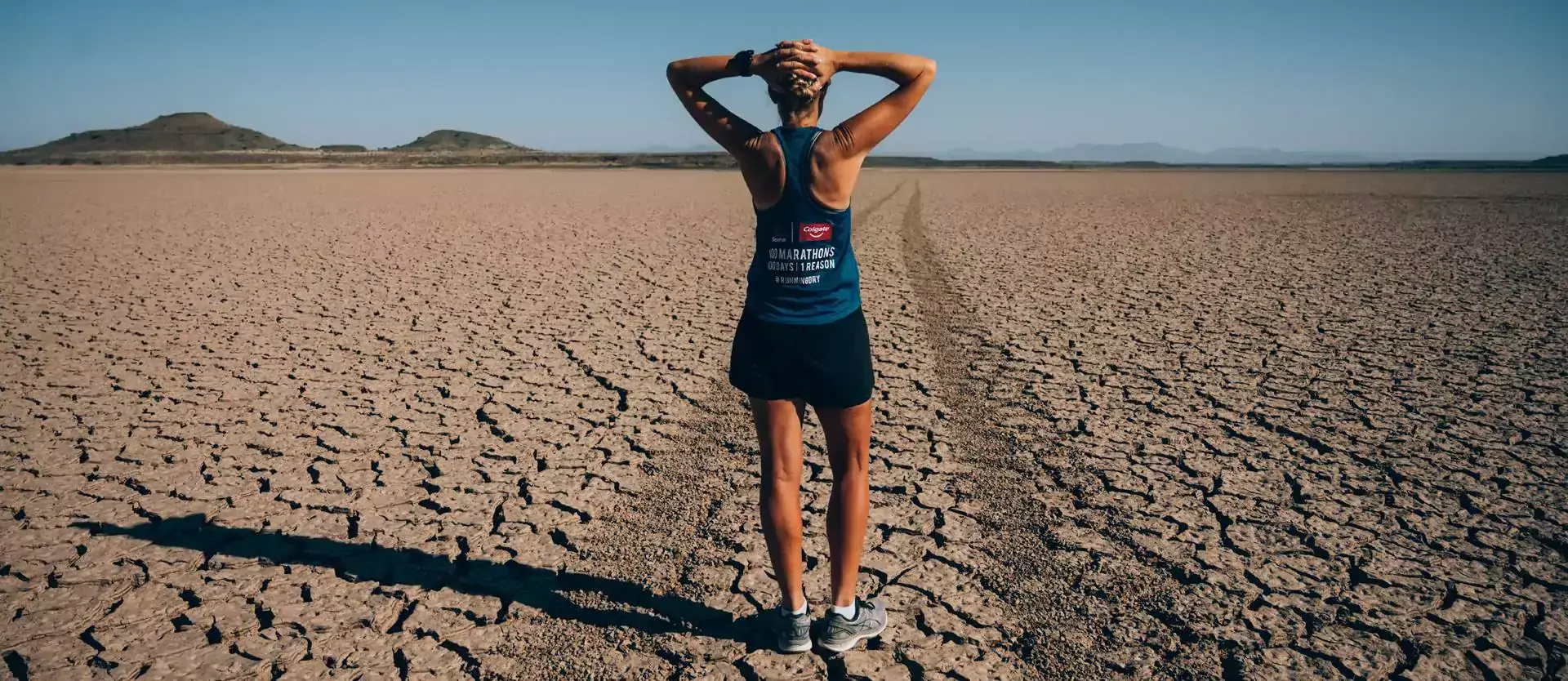
Canadian Hydrologist James Bruce said back in 2016, “if climate change is a shark, then water is its teeth”.
Over the last decade, billions of people around the world have felt that shark bite. Storms, extreme weather events, flooding, drought. Water has been at the forefront of the climate crisis and one of the clearest indicators that our earth is changing Fast.
It’s easy to read stories in the media about climate change and drought and feel numb. Most of them are about people we don’t know, and places we haven’t been. And in our busy lives, if we don’t feel like they affect us personally, these stories are easy to dismiss. After all, even if we do want to help, what can we do other than give donations to support the incredible work civil society is doing to help those impacted.
The reality is that the stories we read aren’t just numbers on a page, or stories in the news. They are real people in real places suffering the consequence of our rapidly changing climate.
They are on the frontlines of this crisis, and they deserve more.
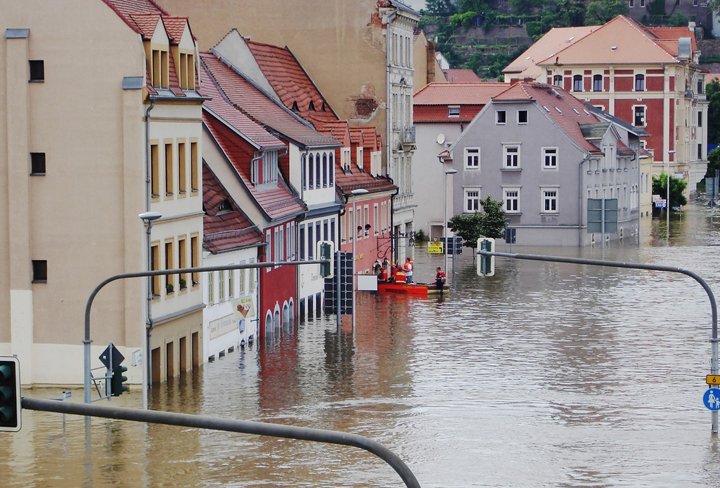
Remember the thousands of people in Germany who have lost their homes and towns due to flooding. The communities in the Atacama in Chile, lying under the remnants of tailing dams which broke following extreme weather events and buried thousands of people. The cotton and rice growers in Uzbekistan who have watched while over 30 years one of the biggest inland oceans in the world and their source of water, literally dried up before their eyes. The next generation of farmers in South Africa, India and Australia inheriting farms that are so parched, grass grows in the bottom of what were once extensive reservoirs of water.
This isn’t about advocating that we all adopt some type of altruistic behaviour where we do things just for the good of others (as great as that would be!).
Our global supply chains mean our planet is more connected than it’s ever been. The communities buried under the byproducts of the tailings dam were miners extracting the minerals you need for your phones. The farmers on the shores of the Aral Sea in Uzbekistan, and in South Africa, India and Australia grow the food and textiles you need to eat and wear. And many of the people in Germany work in the factories and research centres needed to produce many of the products sitting on your shelves.
Globalisation of consumption means that the problems we see on the other side of the world, don’t only affect people and communities there, they affect us and our way of life. And that means that they’re not someone else’s problems to solve, they’re ours too. Which is actually good, because it means we can do something about it. Every single one of us.
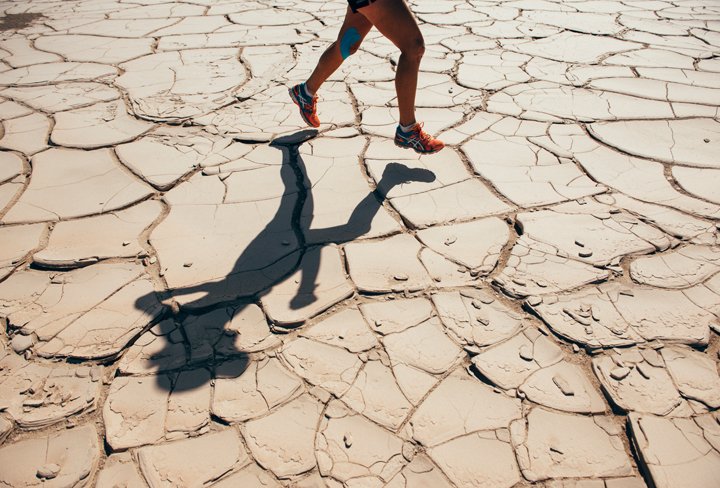
Back in 2018 I set out to run 100 marathons in 100 days in 20 different places around the world. I wanted to go to the frontlines of the water crisis, to meet the people suffering from it, and those working to solve it. More importantly, I wanted to share their stories, and to show the world what it truly meant to be 100% committed to solving these problems.
The stories we found, and the people we met along our journey were incredible - the women and girls spending hours each day going to fetch water, the kids skipping school to wait for water to be delivered in towns that had run dry, the bedouin who told me “the next world war will not be fought over terrorism or oil, but over water”.
All of these and dozens and dozens more - the tip of the iceberg of communities feeling the water consequences of climate change. Not 30 years from now, but right now.
Its hard to find words to describe how I felt when i saw the true damage We've done to our planet and its people. Shocked. Horrified. Gut Wrenchingly sad. But also frustrated, angry and yes - disappointed. Disappointed that We've become so blind to the impact of our patterns of behaviour. Angry that so many decision makers sitting in boardrooms far away ignore the impact their operations are having not only on the environment but on the communities and the people involved in it. And frustrated at our apparent unwillingness to take simple actions to solve such an obvious and catastrophic problem.
But in Cape Town on day 63 of 100, something very special happened that showed me the power of hope. The power of our global community to step up into the leadership and action vacuum, and to say that when it comes to water, enough is enough.
Over the last few days (weeks if I’m honest with myself), I’d been aware that my body was breaking down. I’d gone from running to walking and walking to hobbling. And on day 63 when I could no longer walk unassisted across a room, our fabulous team staged an intervention and took me to hospital.
It turns out that I’d broken my leg - a massive stress fracture in one of the principle weight bearing bones in my leg. There were tears (lots of mine) and for all of us we felt the heaviness of immense disappointment as we faced the end of the road.
But sometimes the bad things that happen in our lives put us directly on the path to the best things that will ever happen to us.
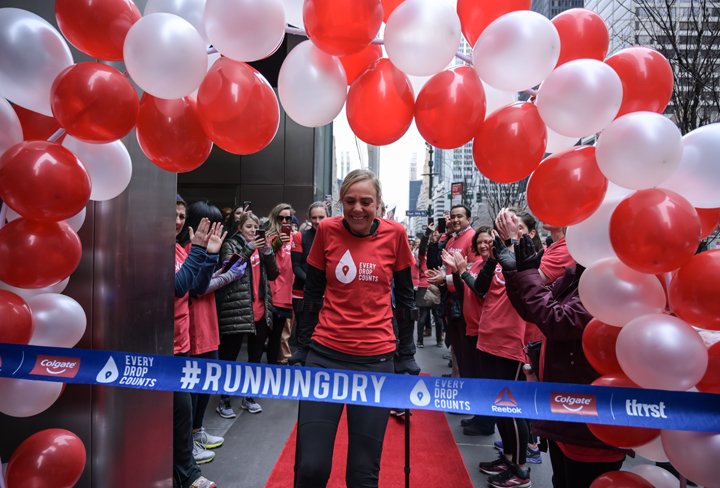
On the afternoon of day 63, my team went out and ran my miles for me.
And on day 64, they were joined by the people of Cape Town.
Every day from then on, more and more people around the world, stepped up to run and walk for water. Thousands and thousands of people across what are now over 153 countries around the world. Ordinary, everyday people sharing stories, encouraging others, developing and building a global water movement. A community that is bigger than any one of us and far greater than the 100 marathons we set out to achieve.
Together we are citizens, voters, shareholders. We are consumers, farmers, students and leaders. We are from all places and all parts of life. And we are joined by the thing that connects us all.
Water.
Because we know that whilst water is everything, we treat it as if it’s nothing. And we want that to change. Not for any one of us, but for all of us.
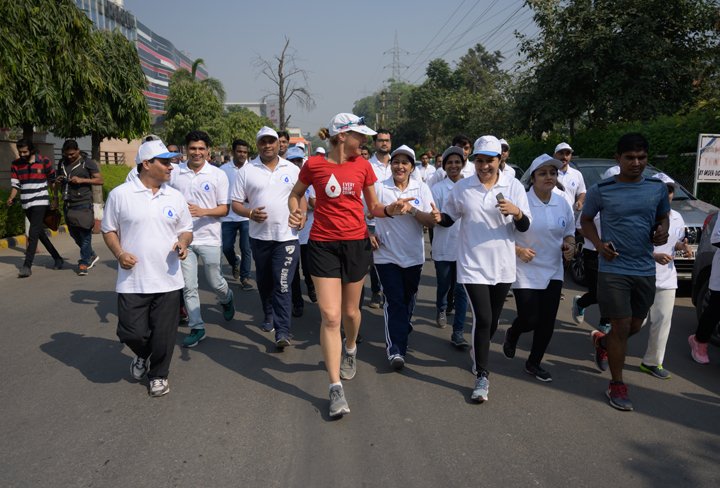
Since I broke my leg I’ve healed. Not just physically, but emotionally too. I’ve hardened in my resolve and in my determination to solve this crisis. I’ve been buoyed by the incredible stories and inspiration of this community. And I’m now powered by the hope I have for a better world for the next generation. Not because of the statements by politicians and heads of state. But by the energy and commitment I’ve witnessed by people like us. Ordinary people, willing to step up and make a difference. People, determined to use their collective power to put water onto the agenda and to push for action by companies, investors, governments.
And honestly - it’s working. We have the attention of CEOs, and policy makers, and our momentum is building. Rapidly. Our goal? By 2023 to get enough commitments from these leaders to close the gap on SDG6 between where we need to be and where we are today.
It’s a huge, world changing ask. But with the passion, grit and determination of this incredible community, together we can do this. Small steps, big impact.
Individually we can make a difference, but together we can change the world.
ChangeMakers Initiative Partners with The European Bank for Reconstruction and Development
Partnering up with The European Bank for Reconstruction and Development (EBRD) was an easy decision for the ChangeMakers campaign.Both organizations believe in ‘environmentally sound and sustainable development’ at a global level.
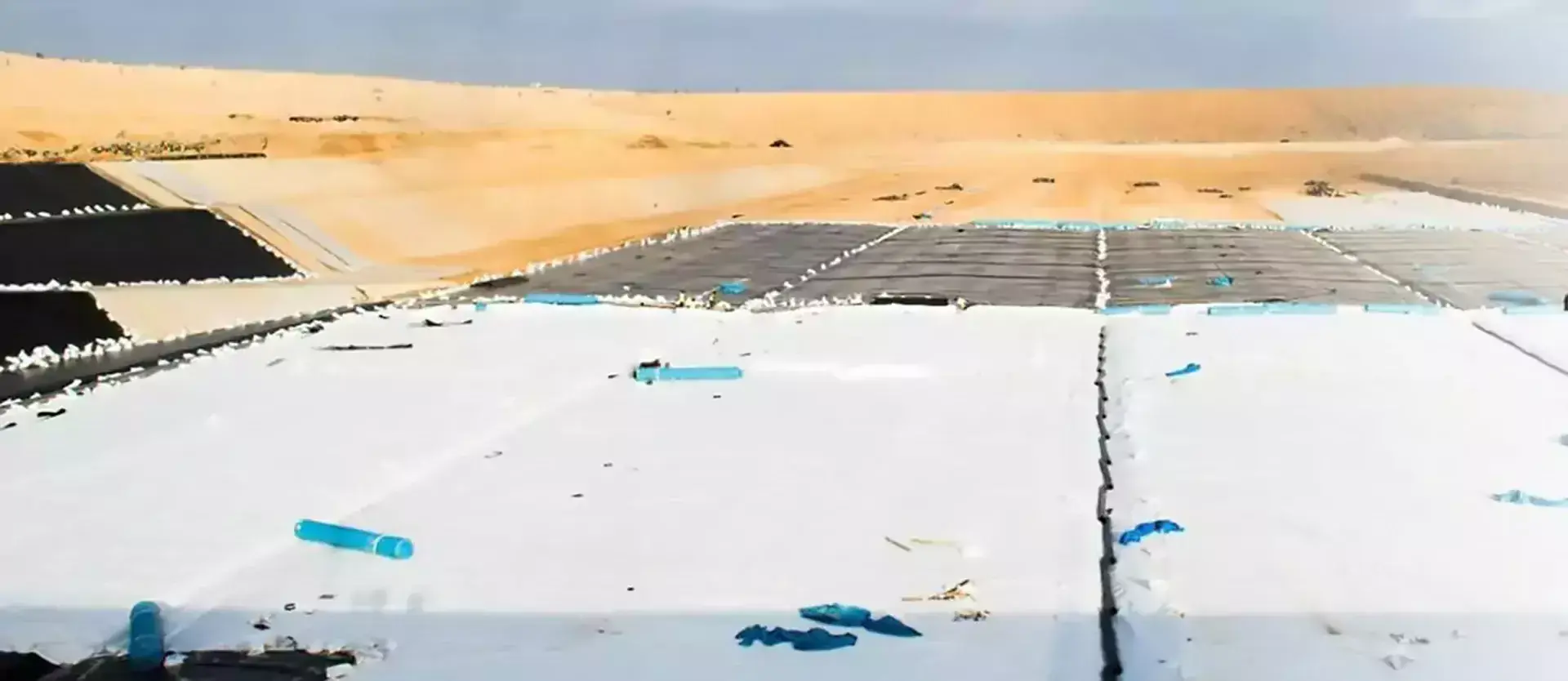
Partnering up with The European Bank for Reconstruction and Development (EBRD) was an easy decision for the ChangeMakers campaign.Both organizations believe in ‘environmentally sound and sustainable development’ at a global level.Furthermore, the very structure of the EBRD, which is owned by 69 countries as well as the European Union (EU) and the European Investment Bank (EIB), represents the ChangeMakers belief that large-scale and meaningful change happens when communities and individuals work together to empower climate action from the ground up all the way to the institutional level, holding world leaders accountable.
The EBRD, established in 1991, has invested more than €149 billion in over 6,000 projects aimed at making economies inclusive, well-governed, green, resilient and integrated through climate finance. Just as ChangeMakers is investing in individuals who show a deep commitment to climate action with the hope of inspiring continued climate activism; the ERBD is investing in developing countries hoping to be a strong and reliable partner that provides high-level policy reform for accelerated and continued efforts for clean transitions.
The ChangeMakers campaign celebrates its partnership with the EBRD, and looks forward to following the Bank’s new ‘Green Economy Transition’ approach that prioritizes climate finance as well as its commitment to ensuring that, by 2025, the majority of its business volume is green. Together we can act for climate, every day.
ChangeMakers Glasgow City Council Partner
The ChangeMakers initiative is honored to include the Glasgow City Council as a campaign partner. Glasgow, Scotland’s largest city, is focused on a low carbon and climate resilient future and is this year’s COP26 host. The Glasgow City Council is an exemplary ChangeMakers ally, focused on both supporting and encouraging climate action with its residents at a local level, and also setting a large-scale target of becoming carbon neutral by the year 2030.
The Glasgow City Council works directly with Glaswegians, supporting their diverse green activities including female and youth empowerment, local nature reserve management, and sustainable fashion. It is also responsible for city-wide projects including a low emission zone to improve air quality, a city food plan for a more sustainable and just food system, and a climate change adaptation plan for the city-region. ChangeMakers knows that climate actions have the most potential when individuals and communities come together for a coordinated and united effort. The Glasgow City Council has repeatedly shown its commitment to listening and pursuing the climate action goals of its residents and ensuring a just transition for the entire community as it works towards a net-zero economy.
ChangeMakers looks forward to seeing how the hard work and commitment shown by the Glasgow City Council continues to promote climate action within the city and inspire large-scale change.
ChangeMakers is excited to introduce its newest ambassador Kehkashan Basu
ChangeMakers is excited to introduce its newest ambassador Kehkashan Basu. ChangeMakers’ ambassadors are activists that are working to promote and encourage climate action.
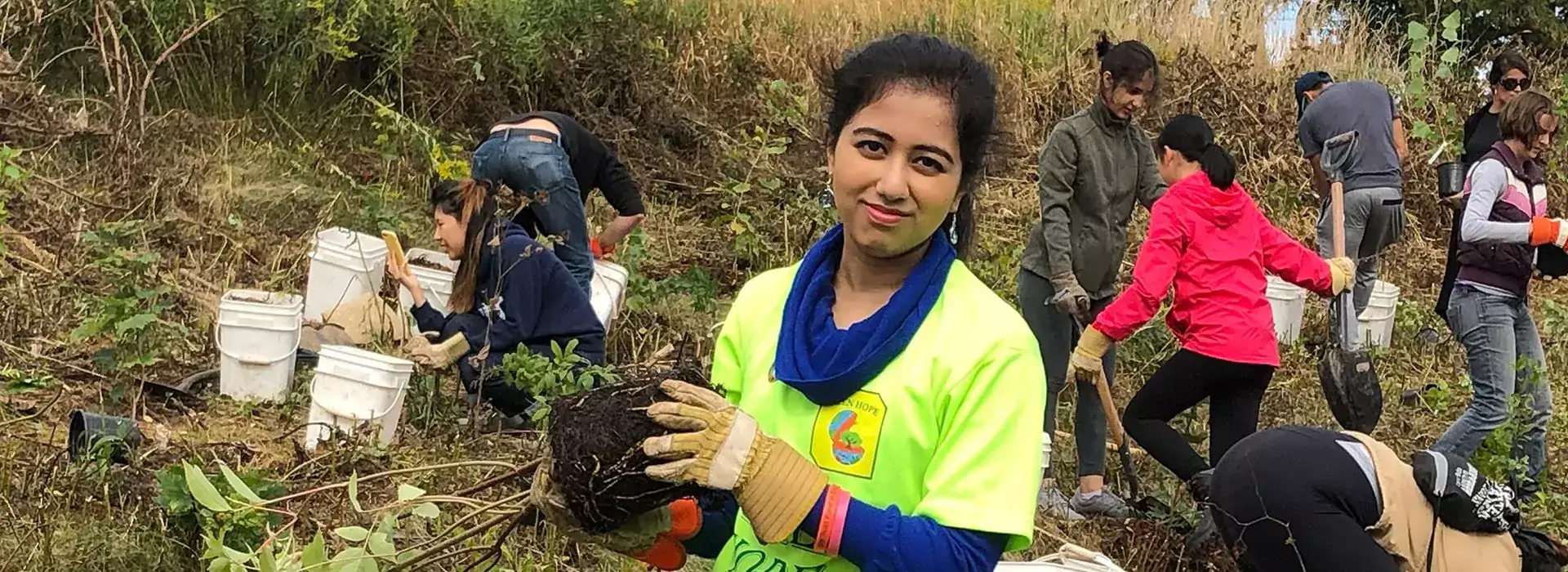
ChangeMakers believes that climate activism is possible at any age, and when individuals start early their actions and commitment only grow stronger over time. Basu embodies this definition. At the age of 12, in 2013, she was elected for a 2-year term as UNEP’s (United Nations Environment Program) Global Coordinator for Children & Youth. And now at 21-years, Basu is the Founder-President of Green Hope Foundation and a youth leader focused on empowering young people, women, and vulnerable communities through climate action and sustainable development.
ChangeMakers knows that change starts with small actions that have the potential to build up and enact large-scale transformation. Kehkashan’s work mirrors this belief. Her foundation works to amplify the voices of young activists through ground-level action campaigns that target accelerated, sustainable development. She is also focused on combining her grassroots action with high-level policy advocacy that targets a myriad of issues like climate justice, biodiversity conservation, and clean energy through her work with the UN and other global climate organizations.
Join us as we celebrate Kehkashan’s work and dedication to climate action. We can’t wait to see what she does next!
ChangeMakers Initiative Celebrates the Partnership with African Development Bank Group
The Climate Investment Funds (CIF) ChangeMakers initiative celebrates the partnership with the African Development Bank Group (AFDB) during Africa Climate Week 2021. ChangeMaker partners are organizations who actively work in the field of climate action and can showcase how their work is pushing for change at the policy and operational level. International, public, not-for-profit and non-government organizations are all welcome to join the campaign.
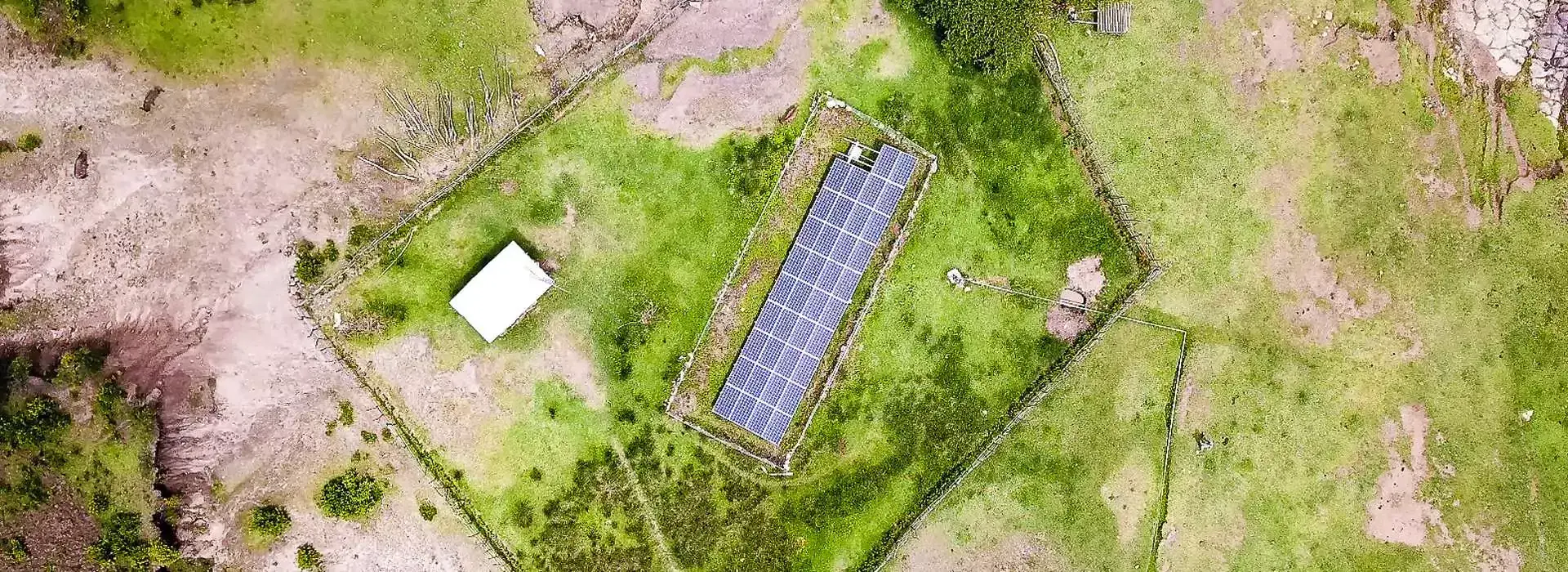
The Climate Investment Funds (CIF) ChangeMakers initiative celebrates the partnership with the African Development Bank Group (AFDB) during Africa Climate Week 2021. ChangeMaker partners are organizations who actively work in the field of climate action and can showcase how their work is pushing for change at the policy and operational level. International, public, not-for-profit and non-government organizations are all welcome to join the campaign.
“The AFDB has a long history of supporting sustainable, economic development. They believe in building resilience to the impacts of climate change, managing their natural resources responsibly, and promoting sustainable infrastructures. Because they are an established multi-lateral development bank, they truly have the leverage and power to mobilize climate action change on an institutional level. ChangeMakers is delighted to partner with such an experienced organization that shares our goals.” says CIF CEO, Mafalda Duarte.
The ChangeMakers campaign hopes to expand its platform and inspire large-scale and institutional changes through partnerships that span from individuals, universities and cities all the way to United Nations agencies and multi-lateral development banks. The goal is to continue pushing, at all levels, for climate action and to hold global leaders accountable.
Kevin Kanina Kariuki, Vice President for Power, Energy, Climate & Green Growth at the African Development Bank Group (AFDB) and a ChangeMakers partner says, “Despite being a minor (3%) greenhouse gas emitter, Africa bears the brunt of climate change impact. This is why, together with the Global Centre on Adaptation, the African Development Bank has recently committed to mobilizing $25 billion by 2025 to strengthen Africa’s adaptive capacity and resilience, through the Africa Adaptation Acceleration Program. The Bank strongly endorses the ChangeMakers campaign, as every progressive voice or deed in support of climate change adaptation and mitigation counts!”
The ChangeMakers Initiative officially launched on September 16, and will continue to showcase global ChangeMakers and partners leading up to and beyond COP26.
C4C joins ChangeMakers!
ChangeMakers Campaign is delighted to welcome Connect4Climate (C4C) as a new official partner of the ChangeMakers initiative. With over 500 partners around the world, C4C promotes and advances climate action through advocacy and creative communications, embracing the ChangeMakers belief that change happens everywhere and through every kind of action.
ChangeMakers Campaign is delighted to welcome Connect4Climate (C4C) as a new official partner of the ChangeMakers initiative. With over 500 partners around the world, C4C promotes and advances climate action through advocacy and creative communications, embracing the ChangeMakers belief that change happens everywhere and through every kind of action.
One of the ChangeMakers goals is that individual climate action inspires bigger transformation on a regional, international and even global level. C4C’s central objectives focus on raising awareness about climate change and its impact at various levels, promoting climate action commitment among the public, private sector, and policy-makers, and building coalitions with policymakers, the private sector, and grassroots organizations for further advocacy efforts.
ChangeMakers is proud to recognize climate action activists of all ages. It’s important to recognize and empower the transformational potential of young participants. As part of C4C’s commitment to inspiring a global climate movement, the organization believes in amplifying the voices of younger generations; whose innovation, entrepreneurialism and passion are at the forefront of successful climate action activism.
Mirroring the ChangeMakers ethos, C4C’s climate action advocacy exists on all levels with the help of all kinds of people around the world. ChangeMakers looks forward to supporting our partner, and acting for climate, every day!
First stop Milano
The Municipality of Milan was one of the early partner organizations to participate in the ChangeMakers campaign an initiative by the Climate Investment Funds (CIF).
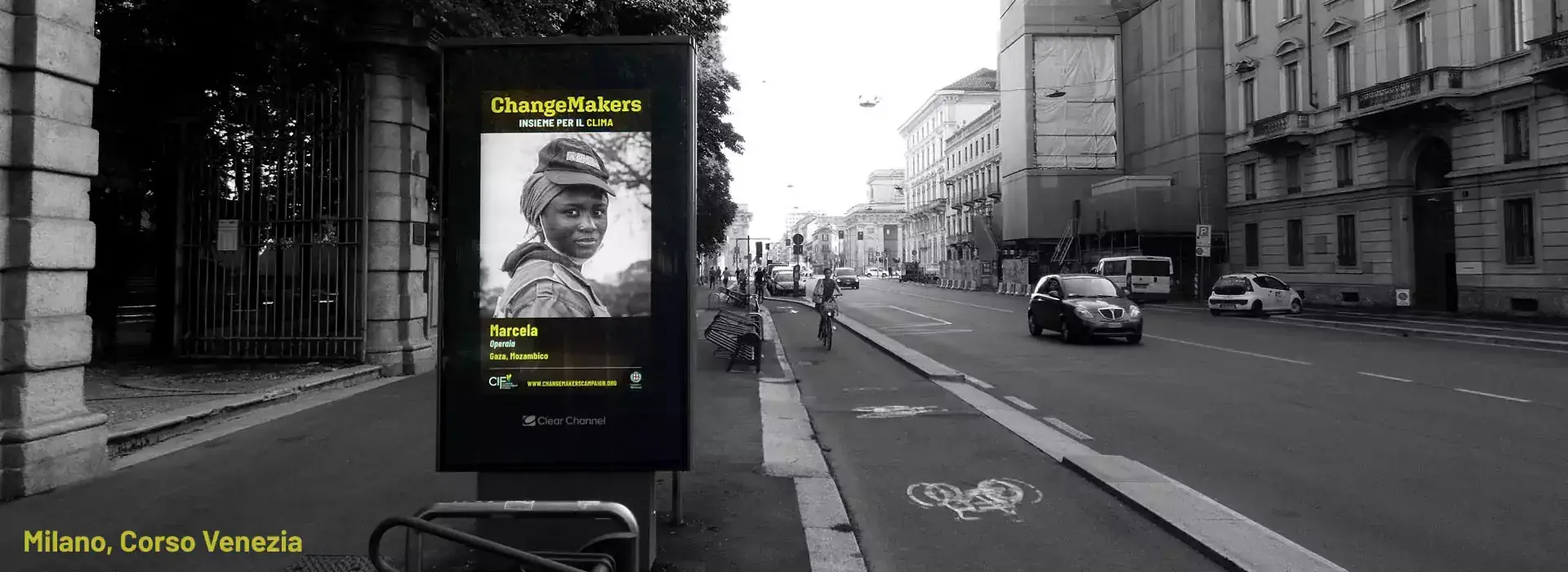
The Municipality of Milan was one of the early partner organizations to participate in the ChangeMakers campaign an initiative by the Climate Investment Funds (CIF).
Starting on August 9, 2021, Milan ran a 2-week communications campaign that featured agents of change throughout the city. Milanese and non-Milanese ChangeMakers who, day after day, act for climate change. Faces of Milan’s ChangeMakers were broadcast to more than a million residents on over 500 digital screens positioned in multiple corners of the city. The campaign also reached millions worldwide through its website and social media channels. These empowering images celebrated the people of Milan and sent out a positive and inclusive message about climate action and the environment.
On September 30, 2021 ChangeMakers will be part of the concert that closes out the Youth Summit. Approximately 400 young people aged between 18 and 29 from the 197 member-countries of the UNFCCC will meet in Milan from 28 – 30 September 2021. ChangeMakers recognizes that the innovative passion and global influence of today’s youth are necessary to change the world’s perspective and actions on the climate crisis.
From September 30 – October 2, 2021 Pre-COP will be held in Milan as the final official ministerial meeting ahead of COP26. The Conference offers a smaller group of countries, who play a key role in climate action and/or in the transition to sustainable development, an opportunity to informally discuss and exchange views on the upcoming negotiations.
Next stop, Glasgow.
Official ChangeMakers video released!
A new global ChangeMakers initiative showcases the everyday citizens dedicated to Climate Action. The Climate Investment Funds (CIF) has officially launched a digital ChangeMakers initiative aimed at recognizing and promoting the diverse climate actions of people living all around the world with the hope of inspiring others to take action against climate change.
ChangeMakers in the Spotlight in Milan
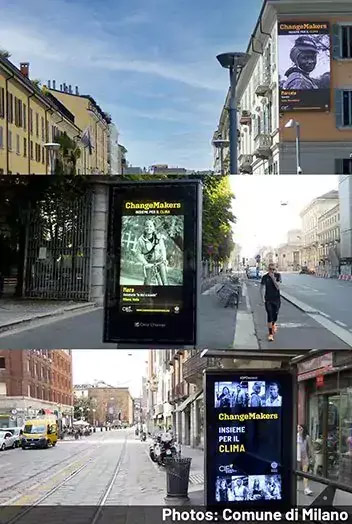
Faces of Milan’s climate action ChangeMakers were broadcasted to over a million residents through street screens and banners, as well as to many millions worldwide through its website and social media channels during August.
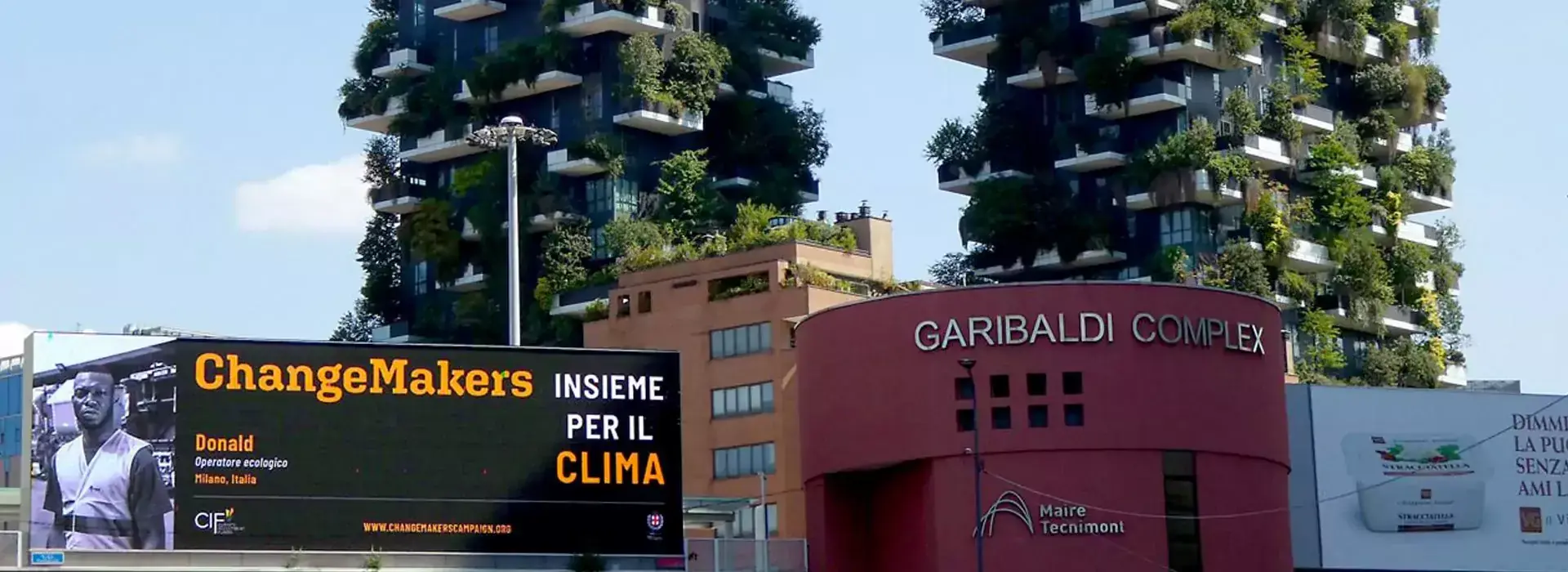
Faces of Milan’s climate action ChangeMakers were broadcasted to over a million residents through street screens and banners, as well as to many millions worldwide through its website and social media channels during August. This is because Milan is one of the first major cities to partner with the Climate Investment Funds on a brand-new campaign to bring the championing of climate action out of the negotiating halls and into the hands of everyday people, all over the world: Acting for climate, every day.
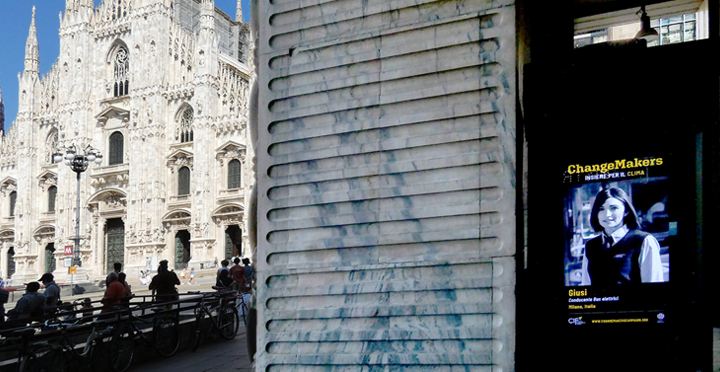
Milan’s actions could not come at a better time. This week saw the publication of the latest findings from the Inter-Governmental Panel on Climate Change (IPCC). It is now unequivocal that human influence has warmed the atmosphere, land and oceans and a 1.5oC warmer world is now expected across all IPCC scenarios by 2040. Only in the most ambitious climate action scenario will we be able to bring the climate back to 1.4 degrees by 2100. As this news sears its way into the consciousness of the worlds’ citizens, it is clear that climate actions – taken by every single one of us – have never been more important.
With the last official ministerial meeting for COP26, Pre-COP, taking place in Milan between the 30th September and the 2nd October, all eyes are on the path from Milan to Glasgow to ensure that COP26 goes down in history as the step-changing climate negotiation summit the world needs. The Climate Investment Funds’ ChangeMakers campaign is designed to celebrate the great diversity of climate action being delivered across the world, already, and encourage and stimulate others to get involved. The campaign aims to send a clear message to leaders around the world – that the citizens they represent, many of whom are already living through the impacts of climate change, care enough to step up and play role.
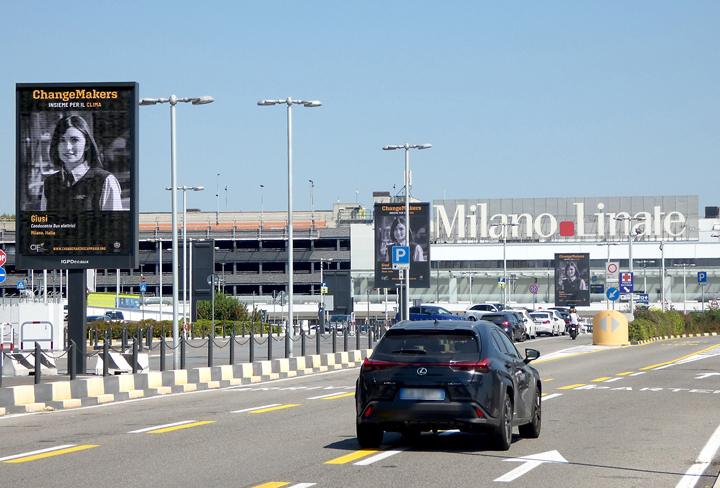
This latest move from Milan follows hot on the heels of the Piano Aria Climate (Air Climate Plan) which placed Milan as a frontrunner in concrete climate action earlier in the year. The plan details 49 concrete action plans in order to reach net zero by 2050 – the first of its kind for any major Italian city. To deliver on this difficult transformation requires hard work and dedication from residents, employees and business leaders from all over the city. This next two weeks will see just a small selection of these everyday changemakers up on the big screens, to celebrate the great work they do.
All around the city, pride of place among some of Milan’s most famous monuments, faces of every day ChangeMakers like Jannett, a Chilean businesswoman, whose names are up in lights for residents and visitors to see.
Elsewhere, along major commuting routes, train stations and residential areas, we see Donald, the recycled waste collector and Maya, committing to cycle to school to do her bit. Empowering images like these are celebrating the people of Milan and inspiring anyone – no matter who they are – to step up and be proud of the climate action they make.
To take a personal action or to become the next city or region to step up and showcase their ChangeMakers, find out more here.